I've decided to expand on the Scamology article I wrote a few days ago, with more in-depth and real, live examples.
Clickbait - what is it?
Clickbait, usually a combination of a photograph and an extreme, polarised or contentious statement.
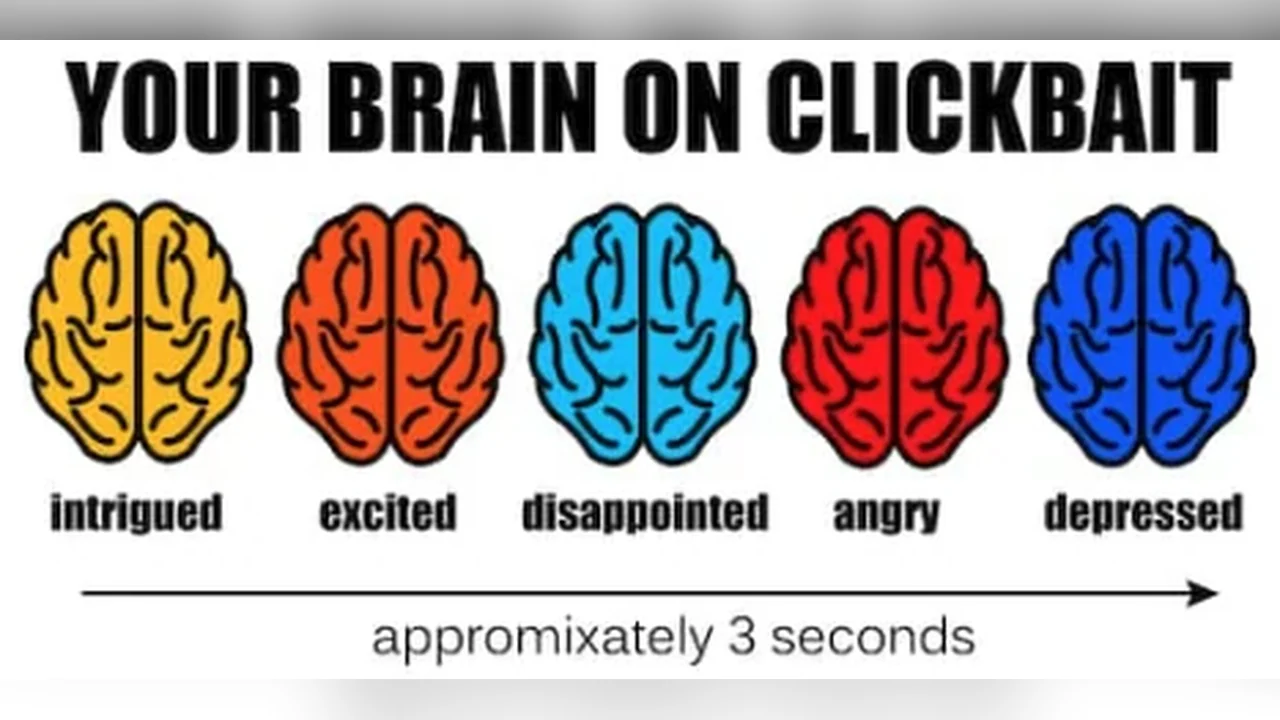
It may be something that intrigues, excites, disappoints or makes you very angry. It is likely to be melodramatic, something which pushes the "right button" to get your reaction, to get you to follow the link.
Clickbait plays on your emotions to persuade you into doing a certain action.
How to recognise it
Very often phrase like "You won't believe how a particular baby actor looks now after 20 years !", "These hacks saved a single mom $800 a month", "People in <insert the town where you live> are making $300 a month by doing this".
Some prey on people's vanity or their perceived intellect, "Can you solve this riddle? 99% can't"
or your curiosity, "8 facts about Donald Trump, OMG number 7 will blow your mind!", of course Donald Trump can very easily replaced with Hilary Clinton or Boris Johnson.
Tasty - Clickbait
Fake kitchen hacks - A more innocuous, but no less financially rewarding clickbait technique is to tap into our inner gluttony. BBC's Chris Fox investigates food lifestyle channels and found many "food hacks" were faked.
Who does it? and why?
It is a part of content marketing, you'll see it at the bottom of "free" content providers. It's designed to catch your attention and encourage you to click'n'share.
Most clickbait is designed to increase traffic or the number of clicks, as the people behind it rely on digital footfall to generate money.
The practice is also associated with misinformation and "Fake news" and the the mass-manipulation of people.
Less commercial and sneakier uses
There are more clandestine uses, where someone or group who wants to influence certain people or as a means of encouraging targeted people to install malware which may increase the number of clicks to specified sites or to spy on the users communications and location as in the case of some hapless Israeli soldiers.
Dozens of Israeli soldiers have had their smartphones hacked by the Hamas militant group posing as women seeking attention, Israel's military says.
How to avoid clickbait
Not all clickbait is malicious, but you won't know till you've clicked on it. Some will remain dormant till a later date or till it's activated externally. Best thing to do is to avoid clicking on things where you're not sure of its provenance.
What do I do?
I have a separate virtual machine that I use for general browsing, which returns back to a known state once it's rebooted, not everyone can do this, so it pays to be vigilant and less curious. Make sure your devices are regularly updated.
What else can you do?
Way back in 1597, Francis Bacon said
"Knowledge is power"
So be informed, tell your family, friends and neighbours.
I've written quite a few articles on LinkedIn, so do take a look for similar material.
More examples
https://www.bbc.co.uk/news/world-middle-east-38594669
https://www.theatlantic.com/international/archive/2014/09/russia-putin-revolutionizing-information-warfare/379880/
Use of content
You are free to use the content I've published on LinkedIn for your own private use. This is also extended to end-user organisations as long as it's attributed to me in the credits.
This series of articles is part of Scamology and fraud
Personal commentary. Views are the author’s own.